Crafting Spooky Elegance with Watercolor Halloween Spider Clipart
When October approaches, the hunt for design assets that balance whimsy with sophistication begins. You likely have a folder full of standard orange and black graphics, but if you want to create something that feels artisanal and unique, you need to look at Watercolor Halloween Spider Clipart. This collection is not just a set of images; it is a toolkit for creating high-end seasonal merchandise. It bridges the gap between traditional spooky themes and the modern "boho" aesthetic that is dominating social media and print-on-demand markets right now.
The Aesthetic: Where Artistry Meets the Arachnid
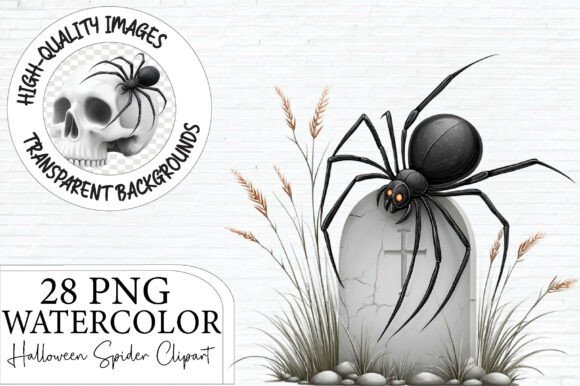
The defining characteristic of this collection is the medium itself. Watercolor introduces an organic, fluid quality that rigid digital vectors simply cannot replicate. We are talking about soft washes of pigment, visible texture, and natural color bleeding that gives the spiders a hand-painted personality. These aren't the scary, hyper-realistic spiders you see in horror movies; these are stylized, artistic interpretations that feel welcoming rather than frightening.
The visual style relies on a delicate balance. The lines are often defined enough to maintain legibility when scaled down, but the fills remain soft. This makes the Watercolor Halloween Spider Clipart perfect for projects where you want to evoke a sense of warmth. It fits perfectly into the "modern farmhouse" or "rustic chic" design trends that are incredibly popular for home decor and apparel. By using these assets, you move away from the cheap, plastic look of mass-market Halloween decor and toward a more curated, boutique feel.
Strategic Applications for Entrepreneurs and Designers
Understanding the file specifications is crucial for a smooth workflow. You receive 28 PNG files sized at 12x12 inches with a resolution of 300 DPI. This is the industry standard for high-quality print production. Because these are PNG files with transparent backgrounds, they are incredibly versatile. You don't need to spend hours in Photoshop clipping paths or dealing with messy white halos around the spider legs. You can drag and drop these directly onto your canvas.
For those in the print-on-demand space, specifically sublimation printing, this collection is a goldmine. Sublimation requires high-resolution source files because the ink bonds with the fabric fibers; low-res images will look blurry and pixelated on polyester. These 300 DPI files ensure that whether you are printing a small pocket design on a t-shirt or a full-bleed design on a coffee mug, the watercolor texture remains crisp and vibrant.
Consider the versatility beyond standard apparel. These assets are ideal for:
- Paper Goods: Designing wedding invitations for a Halloween-themed ceremony, or creating spooky stationery sets.
- Stickers and Decals: The transparent background makes cutting stickers with a Cricut or Silhouette machine effortless.
- Home Decor: Creating wall art prints or throw pillow designs that match a seasonal interior design scheme.
- Digital Content: Enhancing blog headers, social media stories, or YouTube thumbnails with unique, non-generic imagery.
Integrating Clipart into Brand Identity and Visual Hierarchy
Using clipart effectively is about more than just placement; it is about visual hierarchy. In design theory, hierarchy guides the viewer's eye to the most important information first. When using Watercolor Halloween Spider Clipart, you can use the spiders as focal points or as subtle accents depending on their size and opacity.
For example, if you are designing a poster for a local fall festival, a large, central watercolor spider can anchor the design, while smaller spiders in the corners can frame the text. This creates a cohesive visual path. Because the style is consistent across the set, using multiple spiders helps establish brand consistency. If a customer sees your sticker, and then your Instagram post, and then your product packaging, the consistent use of this specific watercolor style builds recognition.
Furthermore, the "personality" of the clipart influences how your brand is perceived. A rigid, vector spider might say "tech" or "corporate," but a watercolor spider says "creative," "handmade," and "premium." This is vital for brand identity. It tells your audience that you care about the details and that you value artistry over automation.
Practical Workflow and Design Tips
To get the most out of this set, think about font pairing. Because the clipart has a handmade, organic feel, it pairs beautifully with script fonts or handwritten fonts. A flowing cursive script can mimic the fluidity of the watercolor paint, creating a harmonious aesthetic. However, for readability, balance that script with a clean sans serif font for the body text. This contrast ensures that your message is communicated clearly while maintaining the artistic vibe.
When testing these assets in your projects, pay attention to contrast. Since watercolors can sometimes be semi-transparent or pastel, ensure they sit on a background that allows them to pop. A dark charcoal background often makes the colors of the watercolor stand out more than a stark black, adding to the sophistication of the design.
Finally, always be mindful of the licensing and usage terms. The No Sharing Policy is a standard industry practice to protect the intellectual property of the artist and the value of the asset for paying customers. Respecting these boundaries ensures that creators can continue to produce high-quality design assets for the community. By incorporating these spiders into your commercial projects—whether it’s a line of greeting cards or a seasonal merchandise drop—you are investing in a visual language that elevates your work above the noise of standard holiday graphics.